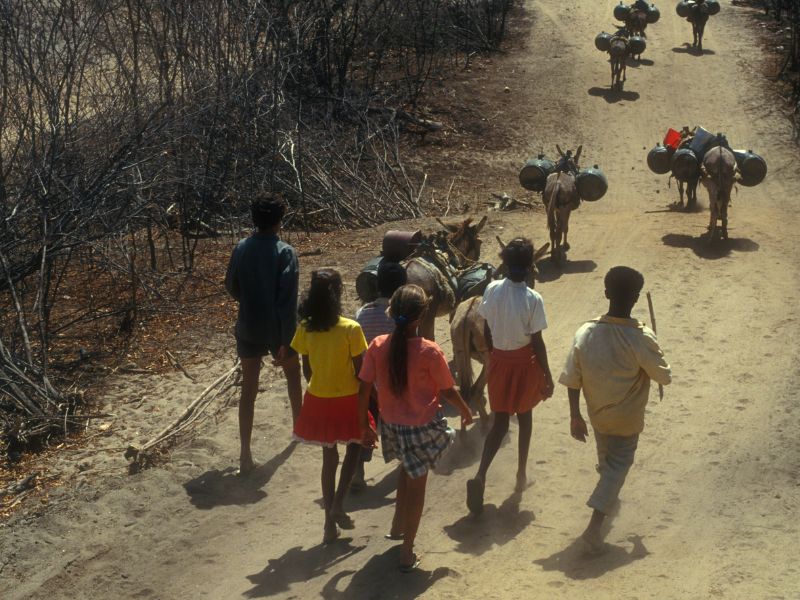
Since late 2020, the Horn of Africa, which is made up of Djibouti, Ethiopia, Eritrea, Kenya, Somalia, South Sudan, and Sudan, has experienced intense droughts in certain regions, resulting in crop failures, cattle deaths and food shortages. The Horn of Africa is the fourth-largest peninsula in the world and is located in the Eastern part of the African continent.
According to an international team of World Weather Attribution (WWA) scientists, higher temperatures have enhanced water evaporation from soils and plants (a process known as evapotranspiration), which has made events like the current drought more intense and more probable.
Note: The WWA is a group of climate scientists who study the attribution of extreme weather events such as heat waves, droughts, heavy rainfall, and floods to climate change.
African Rains
The authors of the new WWA study examined average rainfall data for 24 consecutive months over three areas in the Horn of Africa: parts of southern Ethiopia, southern Somalia, and eastern Kenya. The observed 24-month period covers both of these regions’ wet seasons, the first March-May (long rains) and the second October-December (short rains).
The WWA group reports that “… Using two observation-based rainfall products we find there is a trend towards less rainfall in the long rains but not over the short rains, which show the opposite, a wettening. There is no trend when looking at the short and long rains combined over 24 months”. This means that climate change showed no apparent influence on rainfall patterns when short and long rains were observed together. So what’s causing the ongoing drought?
Drought Cause
The WWA group then took temperature into consideration to determine whether climate change influenced other aspects of the drought, such as the availability of water for plants. To assess the role of temperature, the WWA integrated an assessment of changes in water evaporation from soil and plants as a result of higher temperatures.
The analysis found that climate change made the current drought significantly more severe and about “100 times more likely” to occur by removing moisture from soils at quickened rates due to enhanced warming across the Horn of Africa.
This means that climate change is enhancing evapotranspiration via heightened temperatures, leading to a higher likelihood of dried-out soils and vegetation. “Without this effect, the region would not have experienced agricultural drought”, says the WWA group. They argue that the effects of human-induced climate change directly worsened the ongoing drought conditions.

