
“Global warming” refers to the long-term heating up of the Earth’s surface. Since the onset of industrialization in the late 1700s, greenhouse gases (molecules that absorb and reemit infrared energy) have been accumulating in the atmosphere much more quickly than they are naturally cycled into other systems, like plants, microorganisms, soils, sediments, oceans, and animals. As a result, the planet’s temperatures have been rising.
Global Warming Causes and Effect
Fossil fuel use is the leading human-induced contribution to global warming. Fossil fuels are organic substances taken from the Earth’s crust that can be used for electricity production, heating, transportation, and even manufacturing. Fossil fuels are the remnants of decomposing organisms that naturally create carbon- and hydrogen-plentiful compounds (also known as hydrocarbons), which gradually become buried underground through geological processes that compress and heat them over millions of years.
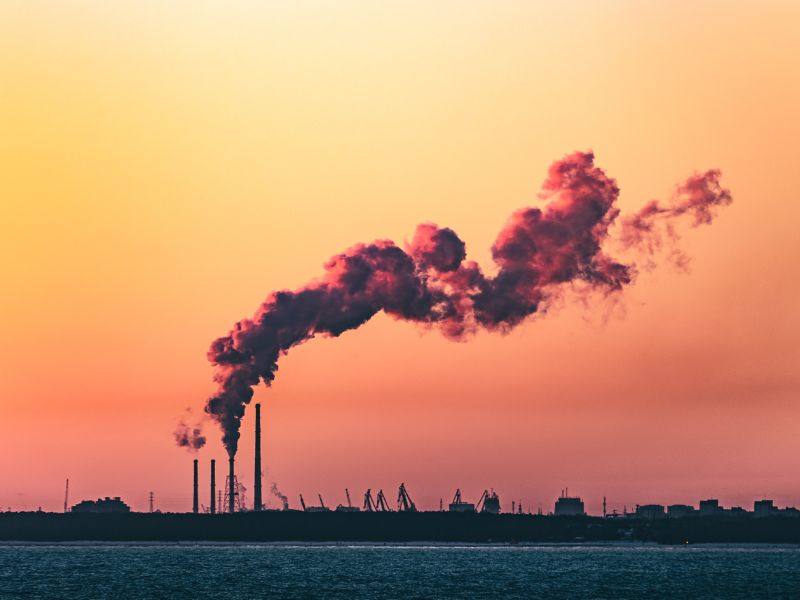
Fossil fuels are burned to meet most human energy needs today. When fossil fuels are burned, the heat energy they produce is used to power engines and spin turbines for electricity. The hydrocarbons in fossil fuels are also used to manufacture complex carbon-based polymers used to make plastics, paints, rubbers, electronics, etc.
As useful as fossil fuels are, their combustion emits greenhouse gases, which act as a climate forcing, or radiative forcing. A climate forcing is the change in energy flux in the atmosphere. In other words, climate forcing refers to the factors that directly change the atmosphere’s net energy composure. As mentioned, greenhouse gases radiate heat, which contributes to the total amount of heat energy in the atmosphere.
Agriculture takes up about five billion hectares, or 38 percent of the global land surface, according to the United Nations Food and Agriculture Organization (FAO). As the global population continues to grow, more space is needed to produce agricultural goods to feed everyone. To create new agricultural space, natural ecosystems have to be converted to farmland suitable for crops. Conversion usually involves burning or clearing. Similarly, logging involves cutting down groups of trees for sale as timber and pulp.
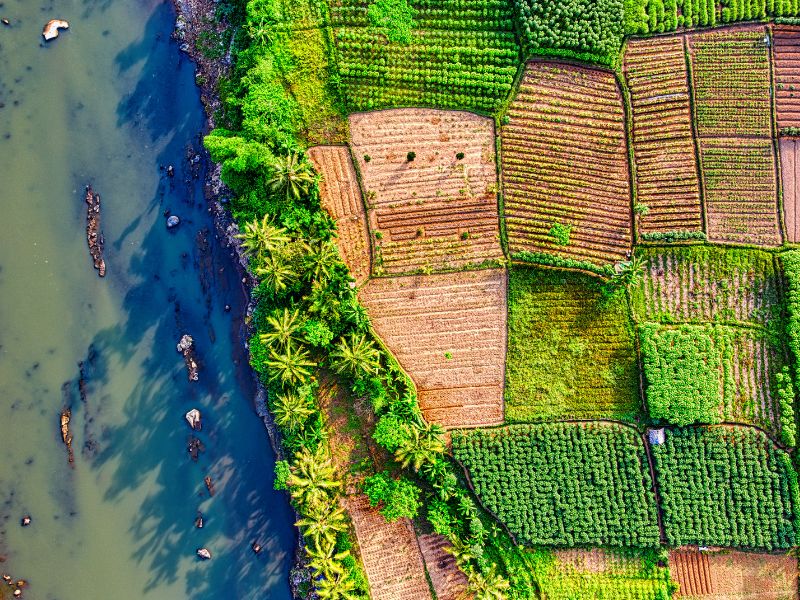
Photosynthetic plants naturally absorb atmospheric carbon and move that carbon down to their roots and into soils. That carbon is eventually stored below the Earth’s surface, where it can remain for millions of years or longer. If however, plants are burned or cut down, much of the carbon stored in them is released back into the atmosphere as carbon dioxide (CO2). This means that land conversions and logging are directly linked to carbon dioxide emissions. The carbon released from clearing trees brings about further heating on the planet’s surface.
Information taken from ice cores, sediments, satellites, and weather stations all point to long-term warming trends in the global climate. From this, four distinct effects have been observed: 1) increased extreme weather frequency and intensity, 2) heightened sea levels, 3) melting ice sheets, and 4) declining biodiversity. The documented changes are widely corroborated by the vast majority of actively publishing climate scientists; most agree that human influence is causing the planet’s climate to destabilize.
Global Warming Effects
Besides more warm spells and heatwaves (a consequence of heightened temperature averages), the likelihood of precipitation, droughts, and wildfire activity is also on the rise in our warming world. The conditions that give rise to extreme weather events are being amplified because there is more moisture and more heat in the atmosphere. Accordingly, we experience hotter heat waves, drier droughts, and more rain.
To illustrate, think about the conditions that make heavy rains possible. For rain to fall, water must be transported from plants, soils, or bodies of water into the atmosphere via evaporation and or transpiration. Global warming is boosting evaporation and is quickening the rate of moisture transfer into the air. This can result in more rainfall in places that have regular rainfall, or it can worsen droughts in regions where atmospheric circulation patterns tend to limit cloud formation and rainfall.
Higher Sea Levels
Sea level rise is related to the melting of land ice and thermal expansion in seawater caused by heating oceans. The most affected communities are those along the coasts. Coastal systems are more sensitive to rising seas because of their low elevation and proximity to large bodies of water.
Erosion from intense wave action and flooding threatens coastal infrastructure more than that of high-elevation and inland territories. On top of that, coasts are highly vulnerable to extreme storms such as tropical cyclones. Coastal storms, including hurricanes and tropical storms, generate powerful ocean waves and harsh winds that indiscriminately damage property and claim lives.
Melting Ice Sheets
Ice sheets are permanent masses of ice that cover a great deal of land in both Greenland and Antarctica. Under the influence of global warming, ice sheets melt more quickly. Water from melting land ice inevitably flows into seas and contributes to rising sea levels. In return, increasing amounts of melting sea ice loss reinforce global warming. This is because brightly colored snow and ice surfaces reflect sunlight back into space at a higher rate than the surfaces of darkly colored seawater, which are more efficient at absorbing sunlight and heat energy. As ice sheets melt, Greenland and Antarctica will continue to heat up, and vice versa.
Permafrost (layers of subsurface soil, gravel, and sand that stay frozen year-round) stores plant material and keeps them from decomposing as long as they remain frozen. Thawing these icy structures will allow the natural breakdown of plant materials to take place. When organic materials decompose, an array of greenhouse gases such as methane and carbon dioxide are released into the atmosphere and intensify global heating.
Biodiversity Loss
A report published in 2021 by the Intergovernmental Panel on Climate Change (IPCC) and Intergovernmental Science-Policy Platform on Biodiversity and Ecosystem Services (IPBES) drew a connection between climate change and biodiversity loss. According to the report, long-term climatological shifts have the potential to adversely alter a wide range of ecosystems.
For example, ocean acidification, which is driven by warming sea temperatures, can be harmful to species that form shells and skeletons from calcium and carbonate. When large amounts of atmospheric carbon dioxide are absorbed by seawater, the water’s pH is reduced and the amount of carbonate ions decreases. Ocean acidification can make shells and skeletons grow more slowly or dissolve more quickly, leaving species like scallops, corals, sea urchins, and clams more prone to impaired health.
Ocean Dead Zones
Ocean dead zones (also known as hypoxic zones) are areas of large bodies of water that have been depleted of the levels of oxygen necessary to support marine life. Hypoxic areas are marked by lowered oxygen levels often due to algal blooms. In aquatic ecosystems, excess nutrients such as phosphorus and nitrogen amplify the overgrowth of algae. Increased plant and algae growth drains oxygen from the surrounding ecosystem and depletes the supply available to other forms of life.
When an aquatic environment becomes saturated with nitrogen and phosphorus, algae in the body of water is given the nutrients to grow excessively. Algae overgrowth consumes oxygen from underwater plants and animals. Large concentrations of algae also obstruct sunlight from reaching other underwater species. Aquatic life will either die, become ill or become ill in underwater hypoxic zones. These areas eventually become biologically desolate.
Ocean dead zones can occur naturally but are exacerbated by agricultural run-off from farmland that carries nutrients from fertilizers and animal manure into rivers and streams, eventually flowing into larger bodies of water. Septic systems and sewage treatment facilities likewise discharge nitrogen that end up groundwater and surface water. Air pollution from cars, factories, gas-powered tools, and power plants also play a role in nitrogen pollution.


Once again great article! Extremely helpful and detailed information about how global warming looks like today
LikeLike
Once again great article! Detailed and helpful information on what global warming looks like in our world today
LikeLiked by 1 person
A good article on global warming. Thank you 🌍🙏
LikeLike