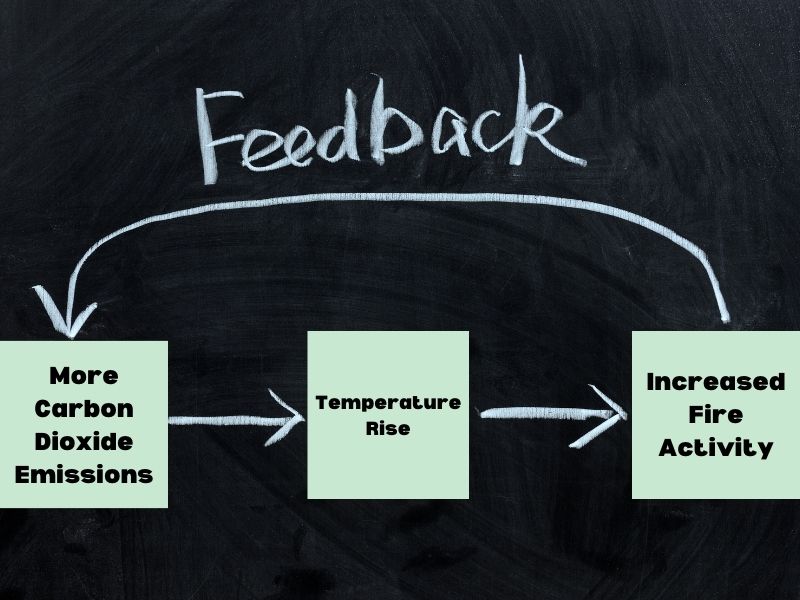
The National Aeronautics and Space Administration (NASA) defines climate feedback as processes that can either amplify or reduce the effects of a climate forcing. A climate forcing, or radiative forcing, is an ongoing process or discrete event that alters energy flux in the atmosphere. Examples of natural forcings include volcanic eruptions and changes in the sun’s output. Feedback refers to the effects of some initial change that influences the likelihood of further changes.
Feedback can be categorized as positive: amplifying an initial change, or, negative: inhibiting an initial change. In positive feedback effects, the process will be self-reinforcing, while negative feedback is self-limiting.
Positive Feedback Loop Climate Change
Take for example the relationship between wildfires and carbon dioxide emissions. According to Steven Earle, Ph.D., in his book “A Brief History of Earth’s Climate”, “the key positive feedback from fires is the loss of carbon capturing capacity of the vegetation that gets burned”. Once plants have been burned away, the carbon dioxide once stored within them is released into the air and the dead plants can no longer act as soak up carbon through photosynthesis. This results in higher carbon dioxide levels and further warming. Hotter temperatures can then trigger drier conditions, which helps wildfires start and spread. And so the loop continues.
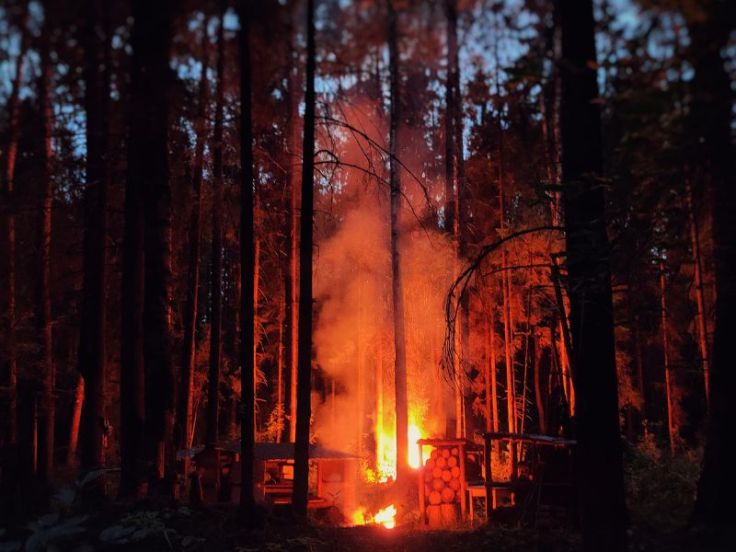
Rising temperatures also increase the rates of evapotranspiration, i.e., the rate at which water evaporates from soils and transpires from plants. Dried-out plant matter acts as kindling during wildfires and enables the spread of flames.
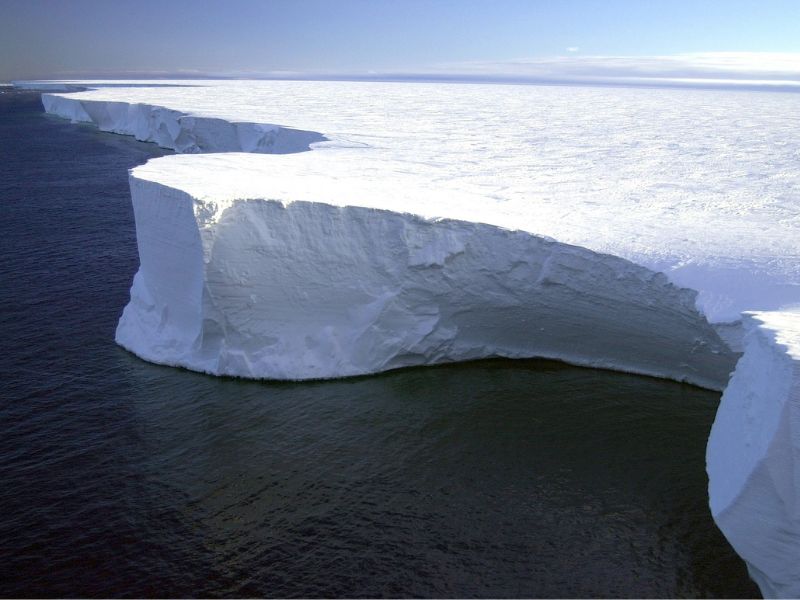
Arctic Sea-Ice melting, for example, is another example of a feedback loop, whereby melting sea ice gives way to darker ocean water, which absorbs more heat due to its lower albedo. The albedo of the ocean is around 0.07. The albedo of brightly colored white snow is closer to 0.8, meaning that the white snow will reflect 80% of the sunlight that reaches it. It turns out that snow-covered ice surfaces are the brightest, most light-reflective of any on Earth, while the oceans are the darkest, most absorbent.
As more open water that is exposed, more solar radiation will be absorbed by the ocean, leading to yet greater amounts of ice melt, and so on. This process is known as the ice-albedo feedback loop.
Each climate has its own unique array of feedback effects. Many of these feedbacks have already locked us into a future in which further heating will be perpetuated by the heating that human activities have already caused. For more information about specific climate change prediction scenarios, please read about Representative Concentration Pathways here.

