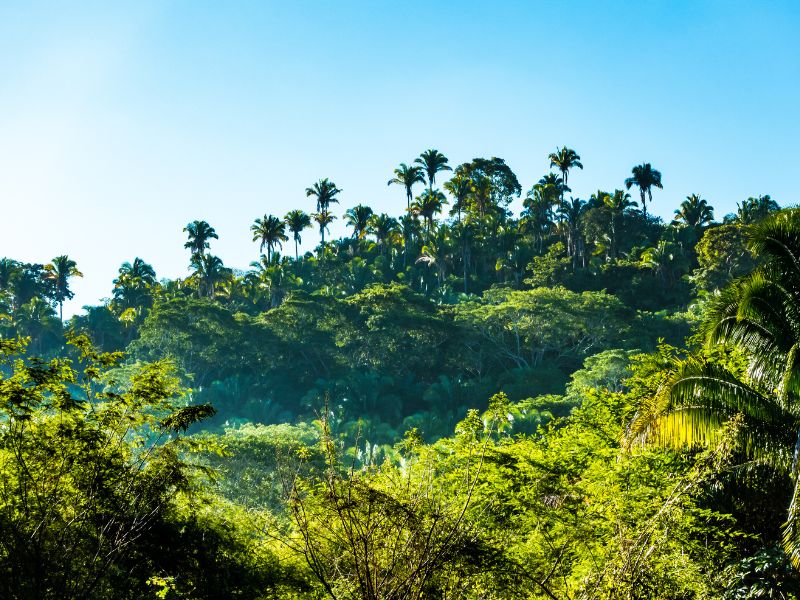
Rainforests have more plant and animal species than any other land ecosystem. As the planet’s oldest living environments, they host rich webs of biodiversity and interacting species that help sustain the ecosystems that embed them. Unfortunately, rainforests are presently threatened by deforestation, over-exploitation, and climate change.
The leading cause of rainforest destruction may be livestock and feed crops. Clearing forests to make way for land pastures and agriculture feed plots is done in Costa Rica, Honduras, and El Salvador to meet the demand for American beef. Cattle ranching is a low-cost, low-maintenance operation in the tropics. Cattle ranching generates profit for land owners, farmers, and distributors.
Nonetheless, livestock feeding plots require sections of forests and other vegetation to be cleared first to make space for pastures and animal crops. Clearing vegetation can increase risks to various processes that rainforest vegetation helps carry out, including enhanced water absorption into soils, sequestration of greenhouse gases from the atmosphere, summoning rainfall, providing nutrients to plant-consuming species, and serving as habitats for arboreal species. These are examples of ecosystem services provided to rainforest environments and the species within them. Services like these emerge from the biological, chemical, and physical functions in rainforest environments.
The growth of human populations has driven our demand for food and textiles to rise, which has ramped up animal agriculture in tropical forests. According to the Food and Agriculture Organization (FAO), agriculture approximately 15% of the Amazon forest has been removed due to agricultural practices since the 1960s. Of the land being used by humans, 80% of it is dedicated to grazing areas for horses, cattle, sheep, or pigs. Put another way, cattle ranching for agriculture is the central use of land in the Amazon basin, which includes Brazil, Peru and Bolivia, Colombia, Venezuela, Ecuador, Guyana, Surinam and French Guyana. These regions are subjected to slash-and-burn clearing before feeding pastures can be established. Therefore, cattle ranching is the leading cause of deforestation in the Amazon Basin. On top of that, animal agriculture contributes to methane emissions, ocean acidification, and worsened air quality.
Savetheamazon.org refers to the plant and animal species of the Amazonian rainforests as its “wealth’. The site posits that up to 80% of developed nation’s diets are sourced from tropical rainforests. Our fruits, (avocados, coconuts, figs, oranges, lemons, grapefruit, pineapples, and tomatoes) vegetables (corn, potatoes, and yams) spices, (cayenne, chocolate, cinnamon, ginger, sugar cane, turmeric) have their origins in tropical ecosystems.
Without these contributions, the diets of developed nations would be severely restricted. Equally as important, rainforests like the Amazon help abate flooding by storing tremendous amounts of rainwater in their plants and soils. However, the continued functionality of tropical rainforests depends on how sustainably we use the land. Harvesting from rainforests at rates faster than they can naturally replenish themselves may contribute to permanent changes in the ecological structures within rainforests.
Amazon Deforestation Brazil
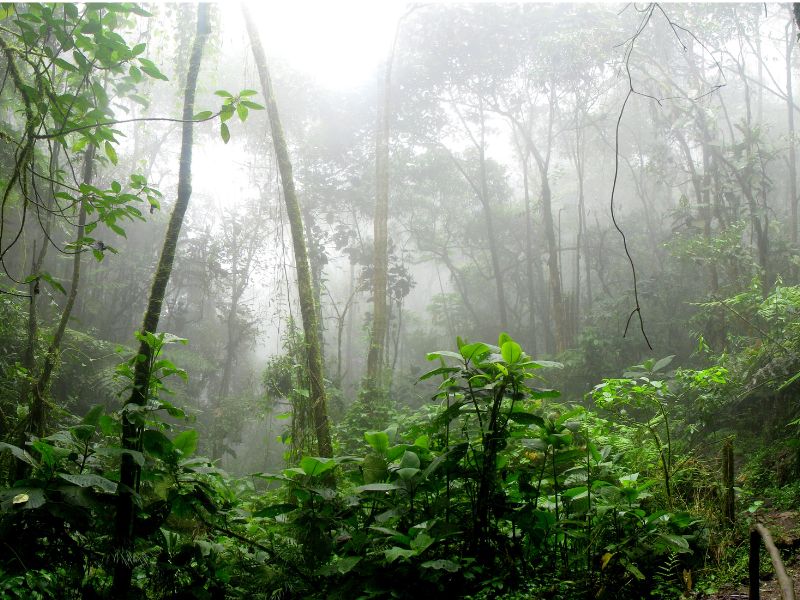
The Amazon Rainforest is an enormous, tropical biome located in South America. The Amazon Rainforest and its river systems cover parts of Brazil, Bolivia, Colombia, Ecuador, France, French Guiana, Guyana, Peru, Suriname, and Venezuela. The rainforest covers an area of 6.7 million square kilometers (2,300,000 square miles), nearly half of Brazil’s total area (40%), and most of the Amazon basin. To date, >350 reptile species, >400 mammal species, >400 amphibian species, 1,300 bird species, and about 80,000 plant species are known to inhabit the Amazon.
Amazon Rainforest Burning
In the past decade, the Amazon has been subjected to a remarkable amount of burning. In the year 2019 particularly, fires engulfed great portions of the Amazon basin. The causes of the Amazonian fires are partly natural, caused by droughts and storms. However, human activity also influences the frequency of wildfires. Human-produced greenhouse gas emissions and land-use changes are gradually making the world warmer, and in some areas, such as the American Southwest, wildfires have been occurring more often in recent decades.
As the Earth’s average surface temperature slowly warms, the soils of certain regions dry sooner, causing said soil and its vegetation to be more susceptible to drying out. This is because evaporation and transpiration happen more at higher temperatures,- heat energy causes liquid water to escape into a gaseous state as airborne water vapor. to Dried vegetation acts as kindling for flames. Warming conditions make soils and plant matter dryer, which catch fire easily when a fire breaks out.
Carbon dioxide is a naturally occurring gas that cycles through Earth’s sediments, water, soils, plants, animals, air, and microscopic organisms. Carbon dioxide can absorb infrared radiation and re-emit that energy back into the air as heat, some of which remains trapped in Earth’s atmosphere. In short, carbon dioxide magnifies the planet’s greenhouse gas effect and keeps the atmosphere warm.
So-called carbon sinks absorb carbon from the atmosphere and store it underground. By reducing the amount of carbon dioxide in the air, carbon sinks effectively lower the heat-trapping potential of the lower atmosphere.
Despite extensive burning in the Amazon during recent years, it’s still estimated to be a net carbon sink. This is probably made possible by the plethora of vegetation in the region, which consumes considerable amounts of carbon dioxide from the atmosphere through a process called photosynthesis a process by which plants create sugars and other nutrients by using sunlight. Soils also can absorb carbon dioxide by soaking up carbon from dead and decomposing plant matter.
Sense tropical forests are high in plant biomass, their soils can take in tremendous amounts of water and nutrients and draw carbon dioxide into plants above and below ground. The Amazon contains about half of the Earth’s tropical rainforests and is therefore quite effective at soaking up and storing carbon.
However, carbon storage is stunted when forest vegetation is burned and cleared. Forest clearing not only leaves wildlife removes habitats for wildlife, but also reduces trees’ and soils’ ability to take in carbon. Much of the carbon that’s been stored in plants is released when the vegetation is cleared or burned. The effect of released carbon and diminished carbon sinking capability may transform the Amazon from a carbon sink (overall repository) to a net carbon source (emitter).

