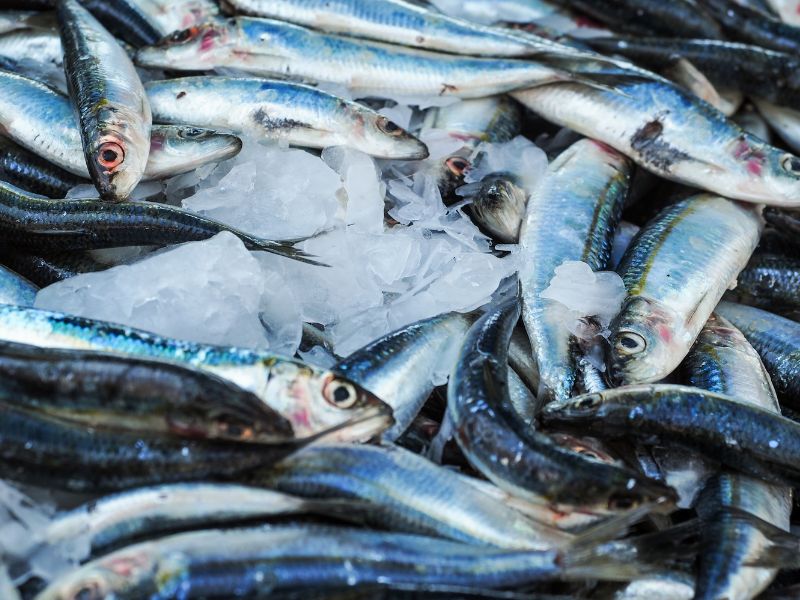
While fisheries generate food and profit, they could do much more harm than good for underwater ecosystems. Large-scale fishing operations have a deleterious effect on species diversity and marine ecosystem function.
Though fish and other marine life are mostly hunted as food, some species are commodified differently. Sharks, for example, are sometimes hunted for their skin which can be used in the making of leather. Other species like whales and manatees are regularly harmed or killed unintentionally by getting caught in fishing nets. According to data cited by the Food and Agriculture Organization (FAO), during the year 2017, between 51 – 167 billion farmed fish had been killed for food.
That same year an estimated 250 – 600 billion crustaceans were also farmed and killed for food. Even animals that are not eaten by humans are caught and killed inadvertently because of drift netting or trawling. Susan Hartland of the Conservation Society says that animal populations are being extracted from oceans more quickly than they can recover. Marine species are therefore collapsing under the immense pressures of large-scale fish-hunting operations. The unintended catches, sharks, sea turtles, and dolphins are called bykill.
Keystone Species and Trophic Cascades
Apex predators often act as keystone species, meaning that they have disproportionately large effects in their natural environments. This makes the removal of sharks particularly concerning. As top predators, many shark species exert top-down influence in their respective food webs. The removal of sharks, and other keystone species increases trophic cascade risks. Trophic cascades are the ecological chain of events triggered by the removal or addition of top predators.

