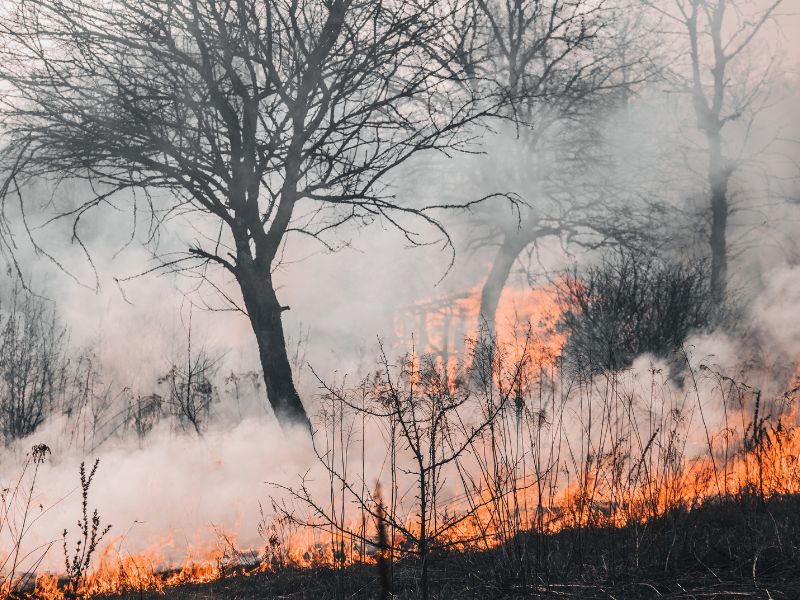
The Caldor Fire started on August 14, 2021, from thus far unknown causes. Sources reveal that the fire has impacted two major counties, El Dorado and Amador, burning more than 200,000 acres (or just over 300 miles) of land over the 21 days that it has been active. The spreading fire reached the Tahoe Basin, prompting officials to call for mandatory evacuations.
Lake Tahoe, which lies on California’s border near Nevada, is a freshwater lake that is a renowned tourist destination due to its outdoor recreational activities such as hiking, skiing, and cruises. 20,000 or more residents of south Lake Tahoe have had to be evacuated as commercial structures and hundreds of homes have succumbed to the growing blaze. Because the communities of California’s and Nevada’s mountain ranges depend heavily on tourism, one has to wonder how badly their economy has been afflicted.
Firefighters have been using helicopters to pour hundreds of thousands of gallons of water and fire retardant on the flames hoping to salvage mountainous forestry and infrastructure. Firefighters that were already working to manage the still-burning Dixie Fire had to be called in to combat the Caldor Fire and stop it from further spreading.
Wildfire and Climate Change
Though wildfires are naturally occurring, they are worsened by certain human-influenced conditions. Digging up and burning fossil fuels, for example, adds excess greenhouse gases to the Earth’s atmosphere, increasing the planet’s capacity to retain incoming solar heat. As the Earth’s average surface temperatures gradually rise, rates of evapotranspiration (the combined evaporation processes of surface water evaporation, soil moisture evaporation, and plant transpiration) are heightened, leaving soils and vegetation more dried out. Dried vegetation acts as kindling for flames.
Hot conditions are highly conducive to wildfires because they make plants more flammable by evaporating the moisture within them. The Environmental Protection Agency (EPA) reports that the annual area burned has been increasing since the 1980s. According to the National Geographic for Environmental Information, the 1980s also mark the beginning of a temperature rise of 0.2 Celsius (0.3 degrees Fahrenheit each subsequent decade).

