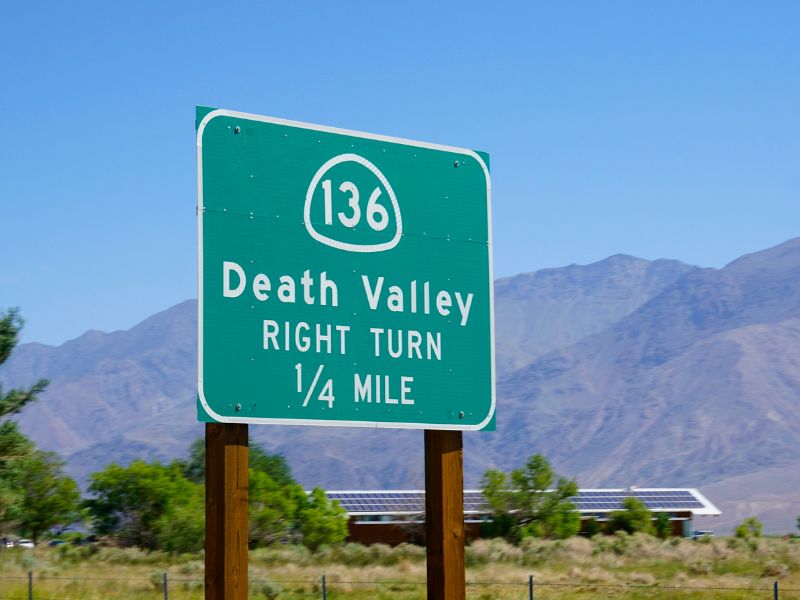
Eastern California’s Death Valley desert—infamously described as the hottest and driest place on Earth, has once again achieved unfathomably high temperatures. Death Valley, which is located along part of central California’s border with Nevada, currently holds a record for one the highest temperature ever recorded: 134 degrees (56.67 degrees Celsius), taken in July, 1913, at Furnace Creek. Most places on Earth rarely reach temperatures at or above 130 degrees (54.44 degrees Celsius), but it’s happened more in Death Valley than in any other region.
Saratoga Springs (the southern end of Death Valley) had a temperature reading of 129 °F on July 16th, 2023, according to weather records from expert Christopher Burt (reported on The Weather Channel). This data lists Death Valley at least seven times in its “World’s Hottest Surface Air Temperatures” ranking. Later the same night on the 16th, air temperatures remained dangerously high.

Highest Temperature in Death Valley
From 12:00AM and 01:00AM on July 17, 2023, Death Valley may have hit a record 120°F (48.9°C) according to readings from Badwater Basin weather station. If confirmed, this will mean that the Californian desert experienced the highest midnight temperature ever recorded in any part of the world. The potential new record is related to a heat dome that’s been baking the United States South and Southwest in recent weeks.
A heat dome occurs when a high-pressure concentration of hot air persists over a region for more than a few days. Currently, the lower half of the United States is in its third week of intense heat, and at least 100 million Americans are receiving heat alerts. People in Nevada, California, Arizona, and Texas have already had to deal with temperatures in the triple digits for several consecutive days.
Though summer temperatures are dangerously high in Death Valley, tourists are still flocking to get a picture with the famous metal thermometer at Death Valley National Park. Apparently, people are hoping to experience the record-setting heat in person. Visitors should take precautions before venturing out into the daytime heat though, as there has already been at least one documented death attributed to the hotness.
On July 3rd, a 65-year-old San Diego man was found dead in his vehicle, which was found with two flat tires, the driver-side window lowered, and a non-functioning air conditioning system. Apparently, the man’s car stopped due to the blown tires, leaving him with no way to escape the desert. An initial investigation is consistent with a heat-related illness as the cause of death. The day before the man was found by a maintenance worker for the National Park Service, the temperature high was around 126 degrees Fahrenheit.

Death Valley Climate
The depth and unique shape of Death Valley are what cause its summer temperatures to be so extraordinarily hot. It has a long, narrow basin that has high mountain ranges. The valley is more than 280 feet below sea level, which prevents much air from penetrating down onto bottom-most levels. So air circulates into and out of the basin slowly. Therefore heat remains within the walls of the valley for long periods.
The lack of plant coverage and cloud coverage allows sunlight to heat the surfaces of rocks and soils unabated. Dry heat is the norm due to limited rainfall in the region. While many other deserts have an average of around 10 inches of rain annually, the average rainfall in Death Valley is merely 2.36 inches.
Looking ahead, more summer heat records could possibly be broken this year. Heatwaves and wildfires in the southern United States will likely continue to add heat to the atmosphere and fuel rising temperatures.


A good post. Thank you 🌍🙏
LikeLike