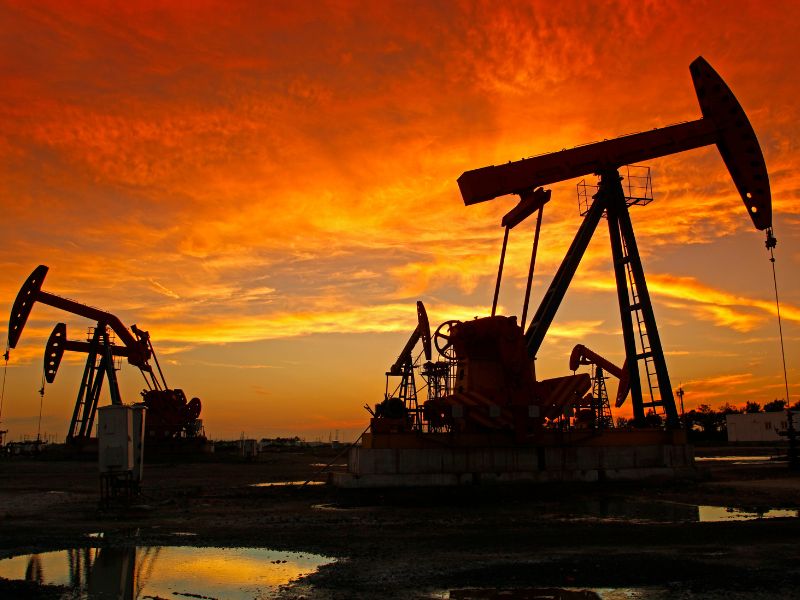
A nonrenewable resource is any material that cannot be replaced by natural means as quickly as it is used to produce energy. This is why the use non renewables is often characterized as being unsustainable: because they exist in finite quantity and are bound to run out before they can be replenished. When people talk about nonrenewables, they are referring to oil, natural gas, coal, or nuclear energy.
Nonrenwable Energy
Fossil fuels are the most common example of nonrenewable resources. This type of energy is formed by geological processes acting on the remains of decomposing organic material. Tissue from long-dead plants and animals is exposed to increasing amounts of pressure and heat, which naturally create carbon- and hydrogen-plentiful compounds (also known as hydrocarbons) as they become buried, compressed, and heated over millions of years.
This heat and pressure can transform organic material into coal, natural gas, or oil. The form that the ancient remains take depends on the type of organic matter involved, the amount of time it has been buried, and the degree of pressure and temperature. For example, plankton and algae can naturally transition from kerogen to petroleum if given enough time. Burning hydrocarbons produces heat energy which powers engines, generates electricity, and supports industrial processes.

In the 21st century, nonrenewable resources are burned to meet most human energy needs. They also serve as the base for common plastic products, such as shopping bags, car parts, containers, electronics, and clothing. Our reliance on fossil fuels is increasing the net amount of heat energy in the planet’s atmosphere, causing global average temperatures to rise. The resultant greenhouse gases from burning these fuels also contribute to ocean acidification, air pollution, and water pollution.
The energy in nonrenewables comes from the hydrocarbon within them. Those hydrocarbons come from photosynthetic organisms (life forms that use sunlight to synthesize nutrients like oxygen and sugars from water and carbon dioxide). Hydrocarbons are molecules consisting of bonded hydrogen and carbon atoms. The stored energy in fossilized hydrocarbon compounds releases energy in the form of heat when burned. Hydrocarbon combustion, the chemical reaction in which hydrocarbons interact with oxygen, also produces water and carbon dioxide.
What Are Nonrenewables Used For?
Nonrenweable resources have a diverse range of uses across sectors of civilization. Oil specifically, has byproducts that are used in pesticides and fertilizers. Natural gas is sometimes used for refrigerating and cooling equipment, and to heat buildings. Coal, perhaps the most abundant fuel source, is critical for the generation of electricity. Fossil fuels may continue to dominate our energy economy because strategies and technologies for their extraction continue to improve.
What Are Some Renewable Resources?
Renewable energy (also known as alternative energy) can be defined as energy that is replenished at a higher rate than it is used. Fossil fuels do not qualify as renewable energy sources under this definition because they are spent more quickly than they are naturally restored. Sunlight, wind, geothermal, and hydropower energies, though, are renewable. Sunlight, wind, geothermal, and hydropower sources are virtually inexhaustible; we will never deplete the global supply. Furthermore, these four energies have fewer related greenhouse gas emissions than traditional fossil fuels.
Solar

Sunlight is the most abundant source of energy available on Earth. Sunlight can be cheaply acquired and has extremely low emissions outputs. Capturing energy from the sun is accomplished with solar panels. When sunlight impinges on a solar panel, the photovoltaic silicon cells convert light energy into usable electricity. Solar panels’ energy generation process is itself 100% greenhouse gas emissions free. Manufacturing solar panels are, however, associated with some carbon dioxide emissions; according to a study in Nature, solar panels produce emissions as low as 20g CO2 equivalent per kilowatt-hour over their lifetime.
The main disadvantage to solar power: it’s not consistently available at all times, in all places. Sunlight energy varies depending on the time of day, season and year, and geographic location. On the other hand, if installed in the right place and stored properly, the electric energy from solar panels can provide energy to people living in remote areas, without the need for larger energy networks. Therefore, purchasing solar panels could save your household money on its monthly energy bill!
Wind
Wind energy comes from turbines. The force created by the motion of air turns the turbine’s blades around a rotor, which spins a generator to create electricity. Simply put, the kinetic energy from the wind is collected by wind turbines, converted to electricity, and then stored for later use. The wind is an inexhaustible resource, it will never run out. Though, like sunlight, the wind is not equally available at all times and in all places. The ideal locations for wind turbine installation are windy areas, that have little wildlife, and are far away from populations of people, as wind turbines can be noisy.
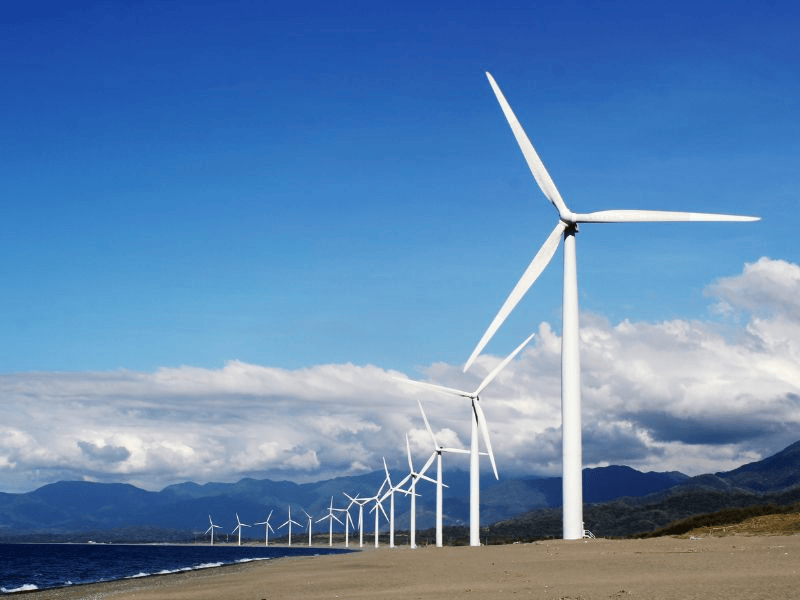
Wind turbines are usually hundreds of feet tall and are often installed in groups, referred to as wind farms. Turbines work better in groups so that sufficient amounts of wind energy can be captured over a large distance. For the most part, greenhouse gas emissions from wind energy are quite low, especially relative to those of fossil fuel combustion. The emissions associated with wind energy are a result of manufacturing their parts and materials.
Hydropower
Hydropower facilities come in four different forms: impoundment, diversion, offshore (seawater), and pump and storage. In each case, the principle is the same, water is energy created by the movement of flowing water which pushes against the blades of a turbine to spin a turbine. Hydropower plants operate similarly to wind farms, in that they convert kinetic energy to electric energy.
Geothermal
Geothermal energy is heat continuously produced inside Earth. Most of this internal heat is brought on by the spontaneous process of unstable atomic nuclei transitioning into more stable versions of themselves; radioactive decay. The decay of radioactive elements results in a release of heat and happens perpetually in the Earth’s core, meaning that this energy can never be exhausted.
Earth’s internal energy heats up underground sources of water, which rises up to the surface as underwater hydrothermal vents geysers, steam vents, and hot springs. This energy too can be made to turn a turbine generator and generate electricity.
Biomass
Biomass is an organic source of energy, that is, it’s the material of or from living organisms. Common biomass materials include agriculture feedstocks, grasses, wood, algae, animal manure, and human sewage. Organic material is consistently available and can, in theory, be used indefinitely. The energy contained in biomass comes partly from the carbohydrates that photosynthetic plants have synthesized using sunlight, carbon dioxide, and water. The carbohydrates from plants and animals can be transformed into usable energy when burned (direct combustion) or converted.

Biomass technically qualifies as a renewable source of energy, but when burned, biomass emits carbon dioxide at rates comparable to fossil fuels for the same amount of generated energy. Unlike burning fossil fuel burning, which releases carbon that’s been stored underground for millions of years or more, biomass burning releases carbon that’s been stored in living organisms, i.e plants, animals, and organic wastes. The carbon dioxide from burned biomass is not moved back into the biosphere as quickly as it is expelled, meaning that biomass combustion is not a carbon-neutral means of energy production.

