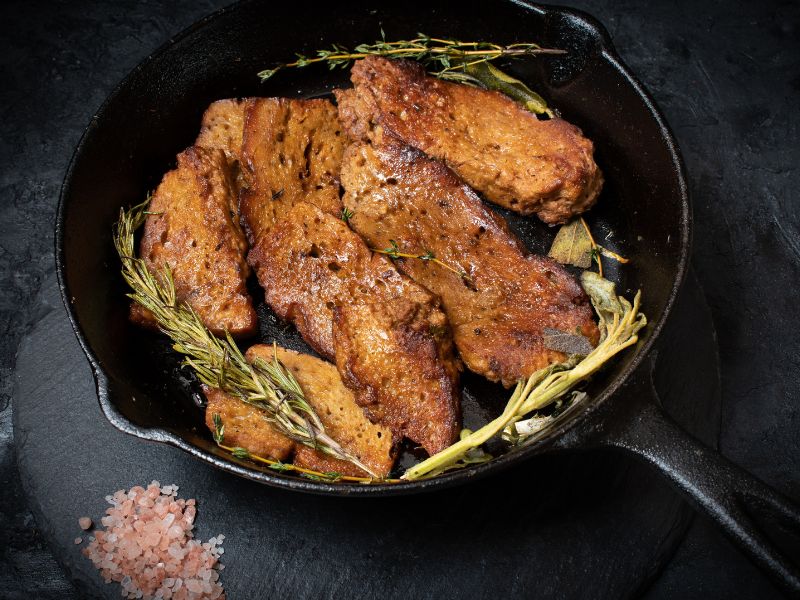
If you’re looking for a healthy, plant-based alternative to animal proteins, seitan may be an excellent option for you. Seitan is high in protein because it’s made from wheat gluten, which is lower in fats and carbohydrates compared to animal proteins. Unlike animal meats, seitan contains no cholesterol and no saturated fats, so it can be eaten routinely without increasing disease risks. Seitan is also a source of minerals like copper, iron, selenium, phosphorus, and calcium.
Seitan (pronounced say-tan) is commonly referred to as “wheat meat” because it has a firm, tender, and somewhat chewy texture and savory flavor that is comparable to steak or chicken. Research suggests that the proteins in seitan may be more easily digested than meat-based protein sources, meaning that seitan’s nutrients could be better absorbed into the body. Seitan is relatively easy to make at home, so you can avoid all the highly processed ingredients that are commonly added to other alternatives when they’re bought at grocery stores or restaurants. On top of that, seitan contains no soy, which makes it ideal for people who have soy-related sensitivities.
How Seitan Affects Cardiovascular Health and Body Weight

A 2014 randomized controlled study titled, “Effect of a 6-Month Vegan Low-Carbohydrate (‘Eco-Atkins’) Diet On Cardiovascular Risk Factors and Body Weight In Hyperlipidaemic Adults: A Randomised Controlled Trial“, compared the effects of low-carbohydrate vegan diets (containing plant-based proteins and fats from foods like seitan) to high-carbohydrate ovo-lacto vegetarian diets (containing some animal proteins and fats).
Research Method and Design
The 23 participants who completed the study were technically overweight, hyperlipidemic men and women. They were instructed to eat either the low carbohydrate or the high carbohydrate meal plan over six months after finishing a one-month-all variation of the diets. The macronutrient intake for the low-carbohydrate meal plan had 26% of energy come from carbohydrates, 31% from protein, and 43% from fat. For the high-carbohydrate meal plan, 58% of energy came from carbohydrates, 16% from protein, and 25% from fat.
The results of the study: weight loss for the low-carbohydrate group increased to -15.2 pounds compared to the -12.7 pounds weight loss increase for the high-carbohydrate participants. In addition, low-density lipoprotein cholesterol (also known as bad cholesterol) and triglyceride reductions were more pronounced in the low-carbohydrate group.
Is Seitan Good for Weight Loss
The study’s authors conclude that low-carbohydrate vegan diets that get protein and fat from plant foods like seitan have weight loss advantages over high-carbohydrate ovo-lacto vegetarian diets that contain animal fats and proteins. Furthermore, low-carb vegan diets had greater lipid-lowering benefits than high-carb diets did, making low-carb vegan diets superior for limiting heart disease risks.

