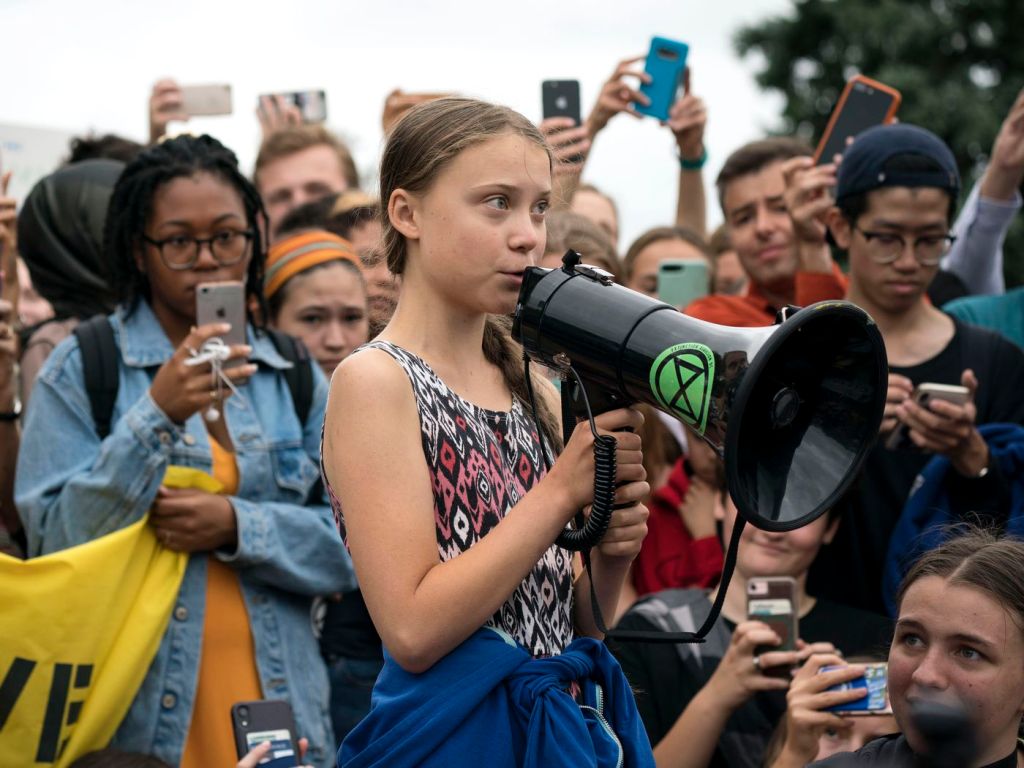
Greta Thunberg is a prominent environmental activist and climate change communicator. The Swedish-born activist is generally well-known for her fearlessly forthright speeches, and her “skolstrejk för klimatet” School Strike for Climate. Greta Thunberg has just made a public video post claiming that the United Kingdom’s (UK) claims about climate change mitigation are lies. If Britain is, in fact, guilty of “creative carbon accounting”, then its future emissions sanctions could be too lenient.
Greta Thunberg Age
Thunberg is currently 18 years old, born January 3, 2003.
What Is Greta Thunberg Most Famous For
Greta Thunberg is mostly popular for a UNICEF video post in which she plainly states that “there is a lie that the UK is a world climate leader and that they have reduced their carbon emissions by 44% since 1944, or whatever”. Thunberg’s post follows an announcement, made by Boris Johnson, that the UK has reduced its carbon dioxide emissions “by about 42 percent on 1990 levels”. British politicians have a long history of proclaiming that the UK is the world’s gold standard concerning climate change mitigation. This may be partly because the UK is the first country to enact legally permitted reduction targets for carbon emissions. The United Kingdom was also the first country to pass a net-zero greenhouse gas (GHG) emissions law (2019) to be achieved by 2050.
To paraphrase, Thunberg goes on to say that all emissions have to be included in GHG assessments; otherwise, your carbon emissions count come out to be “much nicer”. Thunberg is suggesting that the UK has not been accounting for all of its emissions, rendering its assessments ultimately inaccurate. Presenting false climate credentials is a serious charge, especially considering the emerging pertinence of climate crisis. Greta Thunberg says that if you include “aviation, shipping, outsourcing, imports of consumption and the burning of biomass, it [emissions reduction statistics] doesn’t really look that good”.
What Is Carbon Accounting?
Carbon accounting is the quantification of greenhouse gas (GHG) emissions statistics that organizations use to set goals for future reduction targets. Emissions statistics help organizations track their Paris Agreement-compliance. The Paris Agreement is a binding treaty agreement between the 196 parties that volunteered to take part in 2015 at the first United Nations Climate Change Conference, COP21. With COP26 (2021) around the corner, Thunberg’s announcement may serve as a warning for us all to be scrupulous of the emission data that organizations and governments report.
Greta Thunberg’s BBC Interview
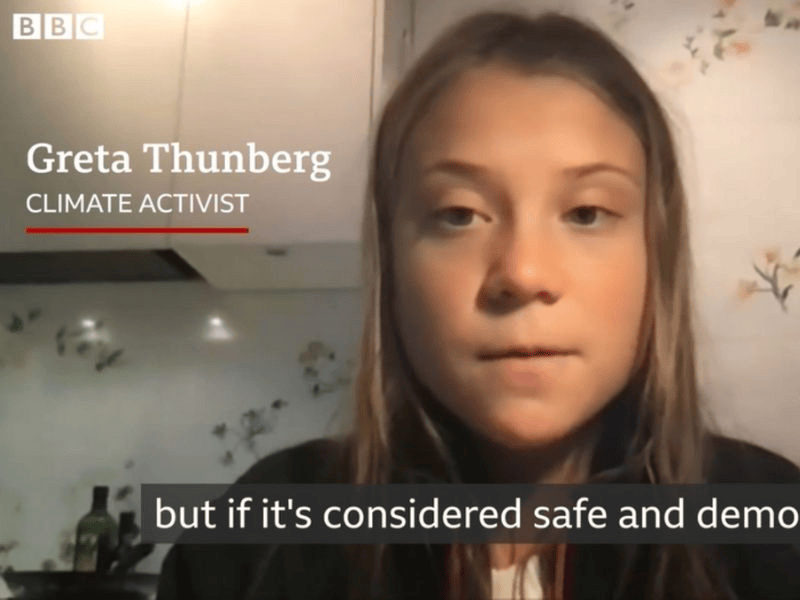
Ahead of the COP26 (Monday, November 1st, 2021- Friday, November 12, 2021) BBC interviewed Greta Thunberg about the upcoming climate change conference which will take place in Glasgow. BBC asked the young environmental activist if she thinks that the conference should take place virtually online or in person; to which she responded that “we get more results when we meet in person… but if its not considered safe, then we have to go for the safest option”.
The safest option is of course to avoid in-person contact to limit the spread of COVID-19 cases across populations. Thunberg admits that she is not certain that she will attend COP26 next month, and that her decision hinges on whether or not the event is “safe and democratic”. This likely means that she she wants assurance that participants are fully vaccinated.
Greta Thunberg World Leaders
BBC then asks Greta Thunberg if Scotland a world leader with respect to climate change progress. In reply, Thunberg essentially says that some countries that have better environmental practices than others, but broadly speaking, there are no countries in the global North who are doing what is needed. Most developed nations have the physical evidence necessary for destabilization climate due to global warming. However, greenhouse gas proliferation is not being sufficiently decreased to meet the recommendations of the Paris Agreement.
In other words, current rates of greenhouse gas emissions are not compatible with limiting global temperature increases at or below 2 degree Celsius (compared to that of preindustrial levels). Thunberg’s comments almost directly counter public statements made by Scottish government, which described its net zero emissions targets as “world leading”. The Scottish government is aiming to achieve net zero greenhouse gas emissions by the year 2045, which at least trumps the United States’ target of reaching net zero by 2050.
Thunberg concedes that “of course there might be some politicians that are slightly less worse than others…”. In other words, not all policy makers and world leaders are equally yoked on climate progress. Also, progressive goals do not always translate into progressive action. As international parties prepare for COP26 in the coming months, meaningful changes must be implemented in order to secure a more sustainable future.

